

john torrison president
   
  • Club Home
  • Club Members
  • Listen with Bill
    • Bill's History
  • Turntable
    • TT History
  • The FlipSide
  • Picturesque!
  • Skips Corner
  • Gulliver's Travels
  • The Club Pub
    • Sucks News
  • Harv's Corner

The Club PUBlication  10/03/2022

10/3/2022

0 Comments

 
Picture
Picture

​CLIMATE Hurricane season gets weird: Fiona, Ian and climate change’s effects on the strongest storms It was a quiet hurricane season, until it wasn’t. 
Dave Levitan Climate Reporter
September 28, 2022

Picture


This year’s Atlantic Ocean hurricane season has had a distinct whiplash vibe. It started in May with predictions of an above-average Atlantic hurricane season. June through August passed with barely a peep from the tropics, and then wham! — two significant, potentially devastating storms formed and struck parts of the U.S. within a week of one another.

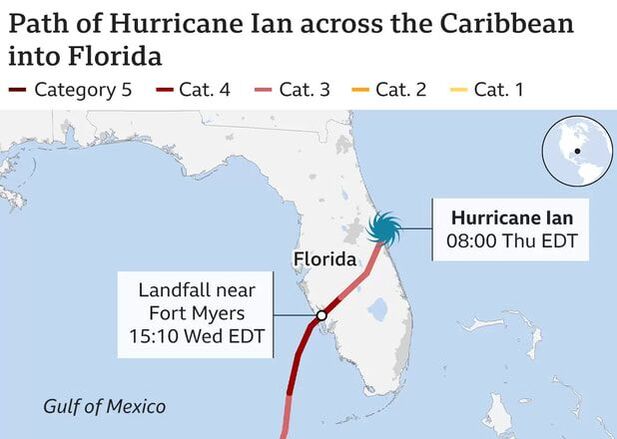
First, Hurricane Fiona dropped 30 inches of rain on Puerto Rico and knocked power out to the entire island, and now Hurricane Ian is barreling toward the west coast of Florida, threatening a dangerous storm surge in Tampa, Fort Myers and elsewhere.

“It has been an unusual year,” said Phil Klotzbach, a senior research scientist and hurricane expert at Colorado State University. “We had no named storms in August for the first time since 1997, and since then we’ve had six named storms, four hurricanes and two major hurricanes.”

Climate change is undoubtedly altering hurricanes and their traditional season in a number of ways that often combine to make the storms more damaging than in the past. But Klotzbach said this particular off-and-on season is more likely due to natural variability. Hurricanes are big, relatively infrequent events, and up or down years, or strangely clustered storms, don’t say much about the changing climate on their own.

He pointed out that the four quietest Septembers in a row — Sept. 10 marks the climatological peak of the Atlantic hurricane season — came between 2013 and 2016, and then each September since 2017 has seen well-above-average activity. This year, specific conditions in August — in particular, strong wind shear, the change in wind direction and speed across varying altitudes — made it difficult for tropical storms to form.

“In September, we’ve had much more conducive conditions, with shear running near to below average,” Klotzbach said.

“Midlevel moisture has also increased somewhat, allowing for conditions where hurricanes can develop and thrive.” Bigger, stronger, faster The total number of Atlantic tropical cyclones has not increased dramatically over the last few decades. But they do seem to be getting more damaging:

Of the 15 costliest storms to hit the U.S., all but one have arrived this century. (Hurricane Andrew, in 1992, is the exception.) Why is that?

For one, climate change appears to be helping them get stronger, faster. “Analysis of hurricane observations over the last 40 years or so do suggest that rapid intensification of hurricanes has increased in the central-eastern Atlantic,” said Karthik Balaguru, a climate and data scientist at Pacific Northwest National Laboratory.

He led a 2018 study that found that the number of hurricanes in that central and eastern part of the ocean that increased in wind speed by 25 knots or more over 24 hours — defined as rapid intensification — increased significantly between 1986 and 2015. That’s because the upper ocean has gotten substantially warmer, and wind shear has decreased. Two of the three most damaging U.S. hurricanes in history, both in 2017, underwent such rapid intensification.

Hurricane Harvey struck the Houston area, causing $125 billion in damage, after intensifying from a tropical storm all the way to a Category 4 hurricane over the course of less than two days.

The next month, Hurricane Maria’s wind speeds nearly doubled, going from a Category 1 storm to Category 5 in under 24 hours just before slamming into Puerto Rico.

New research that is yet to be published, Balaguru added, will show that such rapid strengthening in the “near-coastal” region is also now occurring more frequently, meaning even a relatively slow-moving hurricane is more likely to ramp up in power just before landfall, catching a city or region by surprise.

Another study, from 2019, found that greenhouse gases can reduce wind shear specifically along the Atlantic coast, eroding a sort of natural barrier to hurricane intensification that the region previously enjoyed. This means that in the future, storms that approach the East Coast may reach land much stronger than past hurricanes have managed. A riskier hurricane landscape

The potential for near-shore rapid intensification, Balaguru said, can also be blamed on climate change, with an increasing contrast in temperatures over land and sea. “This has lots of implications for decision-makers, people living in coastal regions, critical coastal infrastructure and for operational forecasting,” he said. “These conditions will also increase the change of flooding after landfall.”

In Florida this week, forecasters have warned of catastrophic storm surge potential as Ian bears down. Along with the changes to the hurricanes themselves, rising sea levels also increase damage, with a higher baseline meaning that the surges will reach higher than they previously could.

This is bad news for Florida and the Tampa area in particular, where 3 million people live in a low-lying, dense area that has seen the seas rise by more than nine inches over the last 75 years or so.

A 2013 World Bank study included the city on its list of the 10 cities most vulnerable to catastrophic flooding; an analysis in 2016 suggested Tampa’s damage could reach $175 billion with a direct hurricane hit.

A warmer atmosphere can also hold more moisture, so the total amount of rainfall from any given storm is potentially higher. Though there are too few storms to make firm conclusions, there is also a trend toward an earlier start to the hurricane season, with more storms forming in May in recent years than in the past.

Taken together, climate change is obviously altering hurricanes enough to make them even more dangerous than in the past.

As Puerto Rico struggles to restore power and Florida battens down the hatches and waits, that has never been more clear.


Thanks to Lillian Barkley for copy editing this article.

Dave Levitan Climate Reporter Dave Levitan is a climate reporter for Grid where he focuses on interconnected stories about climate and science, and politics shaping action around both. davelevitan

0 Comments


Leave a Reply.

    Archives

    May 2026
    April 2026
    March 2026
    February 2026
    January 2026
    December 2025
    November 2025
    October 2025
    September 2025
    August 2025
    July 2025
    June 2025
    May 2025
    April 2025
    March 2025
    February 2025
    January 2025
    December 2024
    November 2024
    October 2024
    September 2024
    August 2024
    July 2024
    June 2024
    April 2024
    March 2024
    February 2024
    January 2024
    December 2023
    November 2023
    October 2023
    September 2023
    August 2023
    July 2023
    June 2023
    May 2023
    April 2023
    March 2023
    February 2023
    January 2023
    December 2022
    November 2022
    October 2022
    September 2022
    August 2022
    July 2022
    June 2022
    May 2022
    April 2022
    March 2022
    February 2022
    January 2022
    December 2021
    November 2021
    October 2021
    September 2021
    August 2021
    July 2021
    June 2021
    May 2021
    April 2021
    March 2021
    February 2021
    January 2021
    December 2020
    November 2020
    October 2020
    September 2020
    August 2020
    July 2020
    June 2020
    May 2020
    April 2020
    March 2020
    February 2020
    January 2020
    December 2019
    November 2019
    October 2019
    September 2019
    August 2019
    July 2019
    June 2019
    May 2019
    April 2019
    February 2019
    January 2019
    December 2018
    November 2018
    October 2018
    September 2018
    August 2018
    July 2018
    June 2018
    May 2018
    April 2018

    RSS Feed