john torrison president
   
  • Club Home
  • Club Members
  • Listen with Bill
    • Bill's History
  • Turntable
    • TT History
  • The FlipSide
  • Picturesque!
  • Skips Corner
  • Gulliver's Travels
  • The Club Pub
    • Sucks News
  • Harv's Corner

The Club PUBlication - Global Warming Part 2

6/28/2021

0 Comments

 
Picture
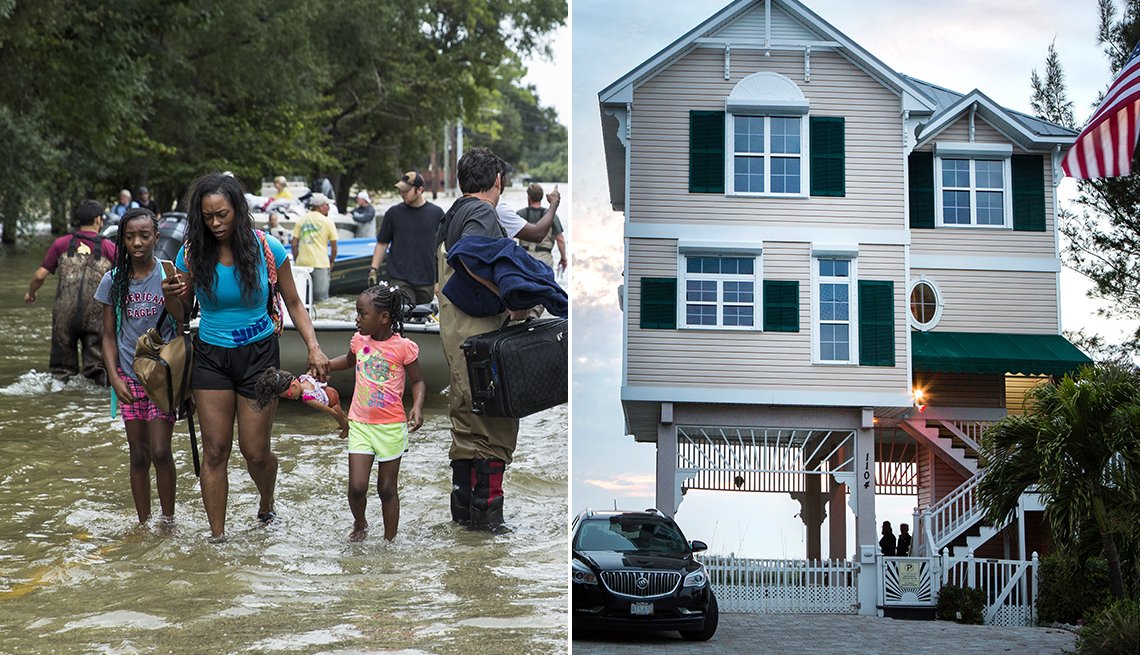
SCOTT OLSON/GETTY IMAGES; JÖRG MODROW/LAIF/REDUX People are rescued from a flooded neighborhood after it was inundated with rainwater from the remnants of Hurricane Harvey, on August 28, 2017, in Houston, Texas; An elevated house on Anna Maria Island, Florida.

Picture
Picture
                             Your home
Risk: Hotter temperatures
Impact: A shifting retirement map


The hot new destination for your golden years might be one that isn't so hot. “Retirees are likely to skip the Sunbelt in favor of mid-Atlantic states, the New England coast and the Midwest, because of climate changes,” says Cornell University gerontologist Karl Pillemer.

As temperatures and sea levels rise, places like Toledo (Ohio), Boise (Idaho) and Burlington (Vermont) may emerge as safer havens for migrating older Americans. The northern Minnesota city of Duluth has even been referred to, somewhat in jest, as America's “most climate-proof city.”
​
"Inland U.S. cities at higher latitudes and elevation are better insulated from extreme heat and coastal flooding,” says Jesse M. Keenan, an associate professor of real estate at Tulane University and an expert on climate adaptation and design. He points to “signs of retiree mini-booms in towns throughout the Appalachian and Blue Ridge mountains,” where there are lower environmental risks than in previous coastal hot spots, as well as lower costs of living.

Forbes now factors climate risk into its annual roundup of 25 retirement dream towns. “When you consider the wildfires, drought and mudslides in California, the 100-plus-degree days in Arizona, and hurricanes and flood surges in Florida, you start to think differently about where you want to enjoy your carefree years,” says Forbes
 contributor William P. Barrett. That's one big reason Fargo, North Dakota, is the only place that has made the Best Places to Retire list for all 10 years the magazine has compiled it. “In picking places for retirement, it's important to think about things like overall cost of living, access to medical care, walkability and crime rates,” Barrett says. “But you also want to go outside without broiling or constantly worrying about evacuating to higher ground.”
​


​​Risk: Chronic weather catastrophes
Impact: Falling home values

In real estate circles, they're calling it the coastal housing crisis, brought on by rising seas and nuisance flooding. With ocean levels predicted to increase in the U.S. by as much as 2 feet by 2045 and as much as 6 feet by 2100, it might be time to rethink that beach house. The threat is already taking a toll on prices in high-risk parts of Florida, even as the broader real estate market sees gains and as rich tech bros flock to Miami. “Housing sales in the most exposed coastal areas of Florida quietly began falling in 2013, and more recently, home prices started dropping — all directly related to climate changes,” says Benjamin Keys, a professor of real estate and finance at the University of Pennsylvania's Wharton School. His 2020 research paper on 1.4 million real estate transactions found that the number of home sales dropped by 16 to 20 percent between 2013 and 2018 in Florida communities closest to the water. “This is a case where water can literally erode the value of your most precious investment,” Keys says.

In other parts of the U.S., rising sea levels sank home values in 18 states, from Maine to Texas, by $15.9 billion between 2005 and 2017, according to research released by the nonprofit First Street Foundation. That included 81,900 homes in coastal North Carolina — picture the hurricane- and flood-ravaged Outer Banks — that lost $582 million in value. Tidal flooding along the Mississippi Gulf Coast, including the devastation of Hurricane Katrina, eroded around $264 million in home values over that same 12-year period.

As with water, so it is with fire. Following catastrophic blazes in 2018 that severely damaged the Northern California town of Paradise, home values dropped 20.5 percent between October 2019 and October 2020, according to the real estate website Redfin.

Interestingly, in California, fires can also stoke the market, as burned-out buyers scramble to find new homes nearby. Sales in fire-ravaged Napa County were up 40 percent in the third quarter of 2020 over the same time period the previous year, and up more than 50 percent in that same period after fires in Sonoma County.
​
If you won't give up that dream of living on the ocean in your retirement years, S. Jeffress Williams, a senior scientist emeritus with the USGS Woods Hole Coastal and Marine Science Center in Massachusetts, offers this simple advice: “Don't buy — rent."

​
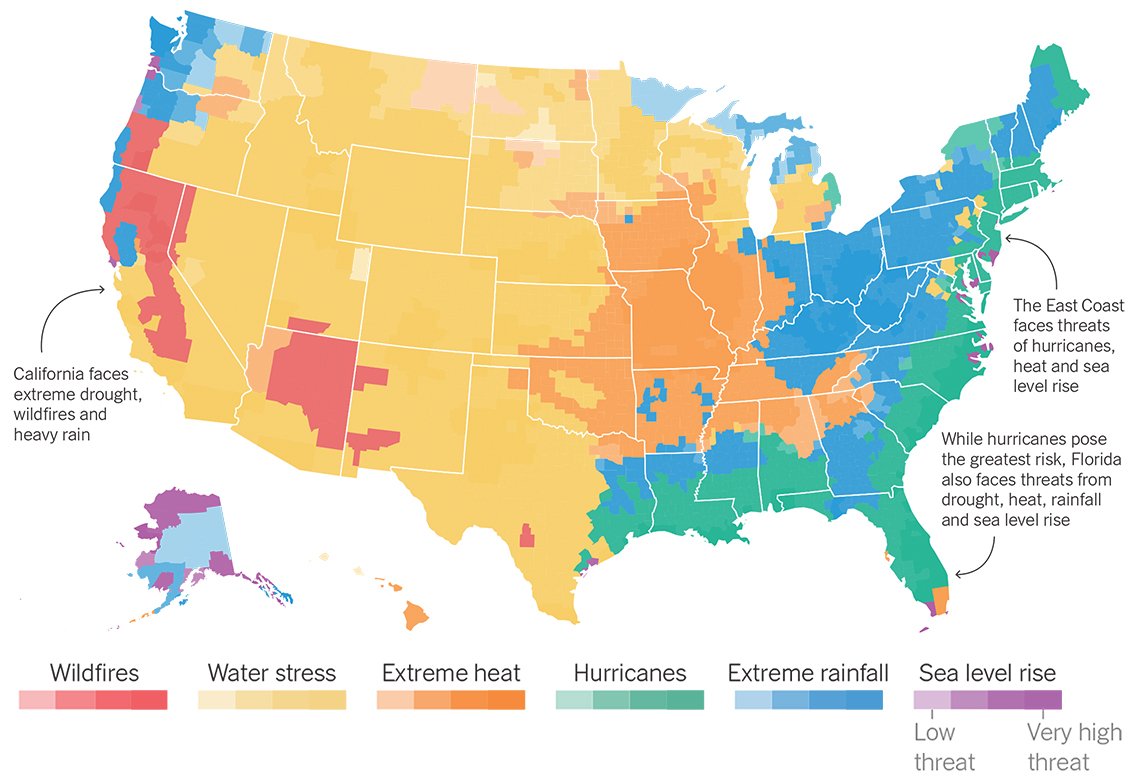
What's the climate risk where you live?  Top climate risks in the U.S. by county — Wildfires, water stress, extreme heat, hurricanes, extreme rainfall, and sea level rise.
Picture
FROM THE NEW YORK TIMES © 2020 THE NEW YORK TIMES COMPANY (SOURCE: FOUR TWENTY SEVEN)
No matter where you are in the U.S., you likely face some type of extreme weather. It's well known that some Western states are prone to wildfires, and areas along the Atlantic Ocean and the Gulf of Mexico are targets for hurricanes. But much of the rest of the country is experiencing other phenomena, according to Four Twenty Seven, a climate research group affiliated with Moody's financial services company. “Water stress” reflects an increasing demand for water in areas that can face drought-like conditions.

Risk: More extreme weather
Impact: More fortified houses
​

About 3 out of 4 adults 50 and older want to stay in their residence as long as possible, according to a 2018 AARP survey. But that may require significant upgrades as heat waves, floods and wildfires impact our homes.

Among potential concerns: mold in basements and on floors, roof damage from high winds and loss of power from storms, says Carlos Martín, a senior fellow at the Urban Institute's Metropolitan Housing and Communities Policy Center.

This is forcing many homeowners to make their structures more climate-resilient. For example, people who live near areas prone to wildfires may need to upgrade their air-filtration systems. If you're in a flood zone, consider moving utility equipment out of the basement to a spot above ground. And your air-conditioning unit may need to be replaced with a more efficient model that can cool your home better. In some places, new construction or even renovations focus on elevating homes and making them stronger and more resistant to wind and water.

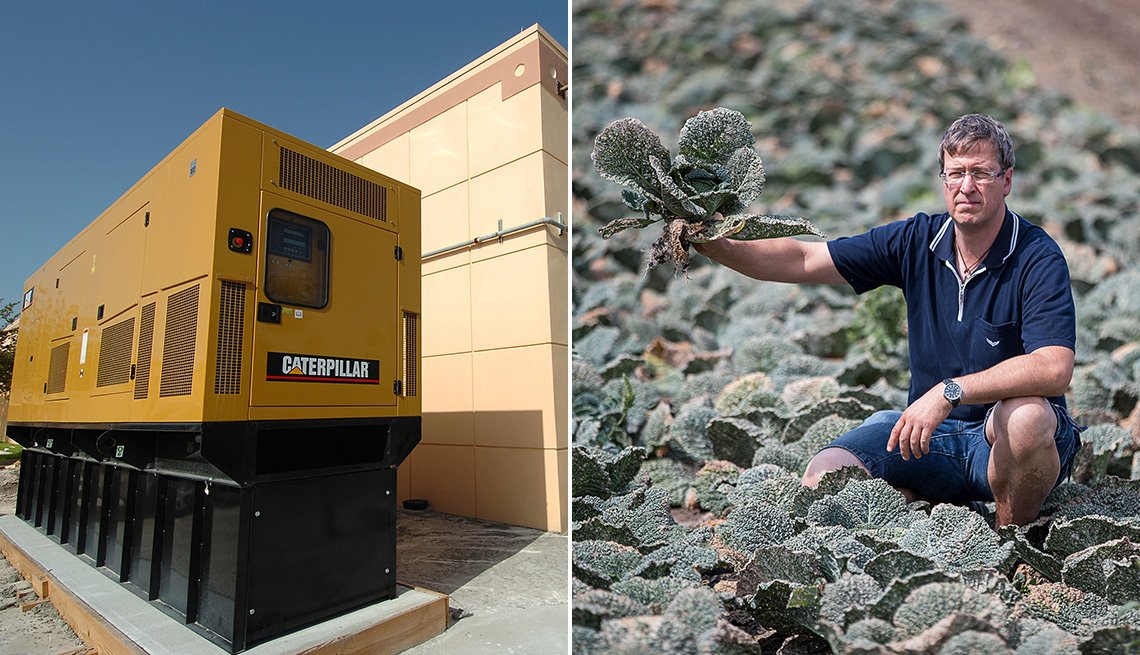
Many people are already taking action; spending on backup electrical generators rose 36 percent between 2016 and 2019, to some $6 billion a year, The Wall Street Journal reported. And metal roofs — considered best able to withstand high winds — are in demand. The Metal Roofing Alliance reported that 8 percent of all newly built homes in 2019 were outfitted with metal roofs, double the market share of 2018. The industry attributes this interest primarily to more extreme weather.

Next Week Climate Change and  Your Health

0 Comments

The Club PUBlication - Global Warming Part 1

6/21/2021

0 Comments

 
Picture
Picture

What You Need to Know About Climate Change

How it's already affecting your health, home and safety — and what you can do about it

by David Hochman, Sari Harrar, Laura Petrecca and Brian Barth, AARP, June 1, 202

Picture
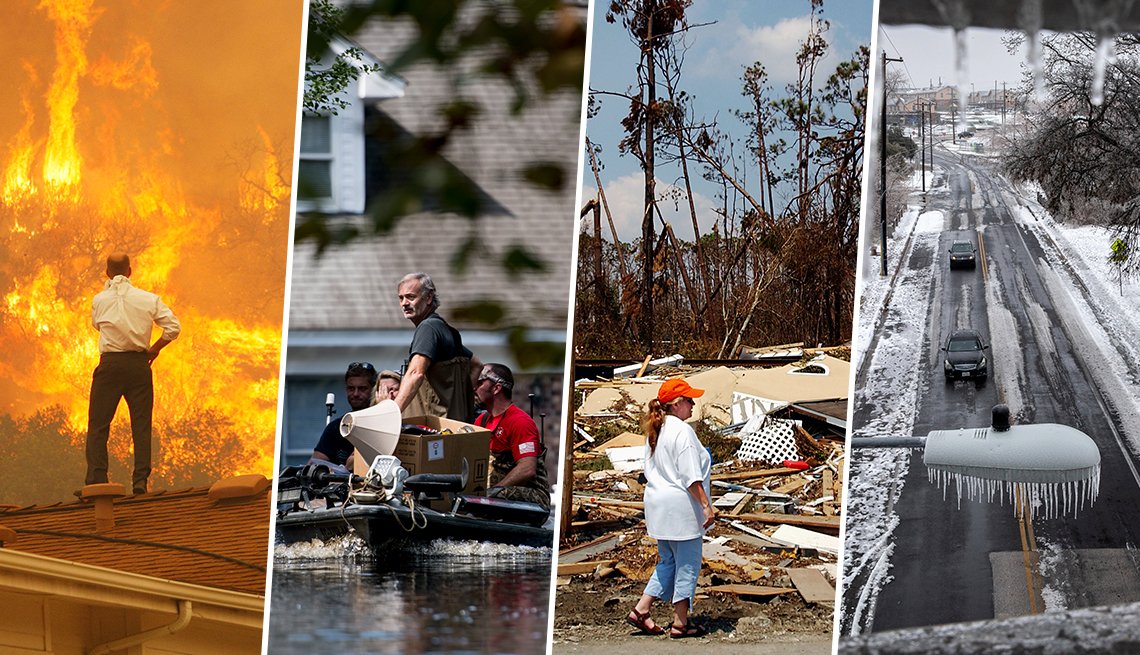
DAVID MCNEW/SEAN RAYFORD/GETTY IMAGES; GREG RUFFING/REDUX; TAMIR KALIFA/THE NEW YORK TIMES L to R: Springs Fire In Southern California, 2013; South Carolina flooding caused by Hurricane Florence in 2018; aftermath of Hurricane Katrina in Mississippi, 2005; and ice and snow in Texas, 2021.

​Remember the Great Texas Freeze this past February? Never-before-seen ice storms crashed trees onto power lines and froze the wind turbines Texans turn depend on for heat and light. Record-breaking temperatures gave way in some places to snowfalls not seen since the Truman administration. Then the pipelines that supply natural gas to power plants froze up. Families huddled for warmth in the dark for days, and the nation watched their misery on TV.

Now let's recall the California fires of 2020, with nearly 10,000 blazes that consumed more than 4.2 million acres of forest and killed 33 people. The North Complex fire alone was responsible for more than 300,000 acres of scorched land, leaving 16 people dead in its wake. Last year's fire season was the worst in California history, claiming countless ancient redwoods and sequoias and changing the natural face of the Golden State forever. Once again, extreme weather played a role: Lightning and a record-breaking heat wave, combined with Diablo and Santa Ana winds, sparked wildfires that kept California on the nightly news for much of the summer.

Those are extreme weather events, but even the everyday has become more extreme. Scientists have been measuring air temperature since the 1880s, and 2020 was Earth's second hottest of the past 140 years, according to the National Oceanic and Atmospheric Administration. Moreover, 19 of the warmest years on record have occurred since 2000. No matter what you may think about the causes, the climate is changing, and the repercussions of this are no longer some distant concern. With rising temperatures and more violent weather come a host of issues that affect how older Americans live — from where we choose to reside and new health risks we face to whether we can still pursue the lifestyles we've long hoped for.
​
To assess these risks, the AARP Bulletin talked with more than three dozen experts and reviewed more than 90 studies. Here is what they say is the current and near-term impact of climate change on older Americans, in four categories: your finances, your choice of home, your health and your day-to-day activities. The experts also share their advice on what to do to mitigate these issues now — and if or when they become more severe.


Picture
JANE FULTON ALT / GALLERY STOCK; JENS B'TTNER/PICTURE-ALLIANCE/DPA/AP IMAGES A backup generator at a supermarket in Royal Palm Beach, Florida; vegetable farmer Lars Fischer shows a savoy cabbage damaged by drought.
Climate change and ...
  • Your finances
  • Your home
  • Your health
  • Your lifestyle
                                 Your Finances
​

​Risk: Greater storm risk
Impact: Rising home insurance rates

Someone has to pay for the devastation of the freezes, floods, hurricanes and fires that increasingly lead the news, and we the people will likely foot that bill through higher insurance outlays. Annual rates are soaring on homeowners policies in storm-ravaged Louisiana and Florida, where premiums are now more than $3,000 a year, even with relatively low rebuilding costs, according to the Insurance Information Institute. Some California residents saw their fire insurance jump 300 percent in 2019 after big burns there.

But another factor in rate increases is uncertainty. “If insurance companies fear that the worst-case scenarios might get even worse, they will have to prepare for that, requiring higher premiums,” says Robert Erhardt, who researches environmental and climate statistics at Wake Forest University. For instance, a storm delivering 40 inches of rain over four days in Texas was nearly unfathomable — until Hurricane Harvey in 2017. After that, actuaries recalculated the odds to 18 percent for a similar or bigger storm by the end of the 21st century because of climate change. That means higher bills.

With more than $20 billion in debt from hurricane payouts, the Federal Emergency Management Agency (FEMA) National Flood Insurance Program raised premiums in 2020 by an average of 11.3 percent, and much more for properties in the most flood-prone zones. All of this is also leading to an overhaul of the system. FEMA will soon unveil “Risk Rating 2.0,” the biggest change to the way flood insurance premiums are calculated since the inception of the program in 1968, with new rates set to take effect Oct. 1.


And you don't have to live in harm's way to feel rates rise. The $20 billion to $25 billion in claims paid out after Harvey “gets passed along to customers even if you live in Washington or Maine,” says David Havens, who covers the insurance sector for investment bank Imperial Capital. “When individual insurance rates go up after a large loss, wholesale rates go up even more, and insurance companies have to recoup those losses.”


Risk: Chaotic farming conditions
Impact: More expensive groceries


Think you spend a lot at the supermarket? Consider that last summer, at least a third of Iowa's corn, soy and other crops were wiped out by powerful derechos, which caused devastating wind damage and torrential rains in the Midwest. Extreme weather also hurt the supply of a favorite beverage: Last year's California wine grape crop decreased by 14 percent, largely because of wildfires.

Overall, the cost of food in 2020 increased by more than double the rate of the year before, the Consumer Price Index shows. Of course, the pandemic caused some production and distribution disruptions, but experts note that the climate contributed as well and will keep prices higher. Even more vulnerable are specialty crops such as coffee, cacao, tea, honey and vanilla beans. Says Amanda Little, author of The Fate of Food, “We will likely see more shortages and cost increases for the most delicious foods."
​
Climate change poses an even greater risk in other parts of the world: Some populations in the Middle East and eastern Africa face famine.

​
Risk: Climate mitigation
Impact: More “green” investment


Within any crisis, opportunity and hope arise. Companies are investing in green technologies, and their successes could boost your retirement or investment funds. “Green investing” is red hot, with investors snapping up stocks, bonds and funds that focus on environmental sustainability.

In recent years, the number of investment opportunities in the ESG category (environmental, social and governance) has skyrocketed, with close to 400 ESG open-end funds and exchange-traded funds, according to fund tracker Morningstar. Some are investing in such assets as green bonds, wind power stocks and clean energy funds.

The additional choices give retirees and those approaching retirement options for diversification, says Mitchell Kraus, a financial planner and chartered socially responsible investing consultant in Santa Monica, California.

"Most ESG investments either outperform or perform similarly to conventional investing,” says Tensie Whelan, founding director of New York University's Stern Center for Sustainable Business, citing a meta-analysis of more than 1,000 research papers the center conducted with Rockefeller Asset Management.
​
Yet just like any type of investing, risks remain. Investors could lose money, Whelan warns. And since there's no universal, agreed-upon standard as to what qualifies as an ESG, there's “wiggle room” for interpretation, she says.

Next Week - Climate change and your home

0 Comments

The CLUB Publication  06/14/2021

6/14/2021

0 Comments

 
Picture
Picture

​Main Antarctic glacier crumbles at faster pace

​By SETH BORENSTEIN Associated Press

Picture
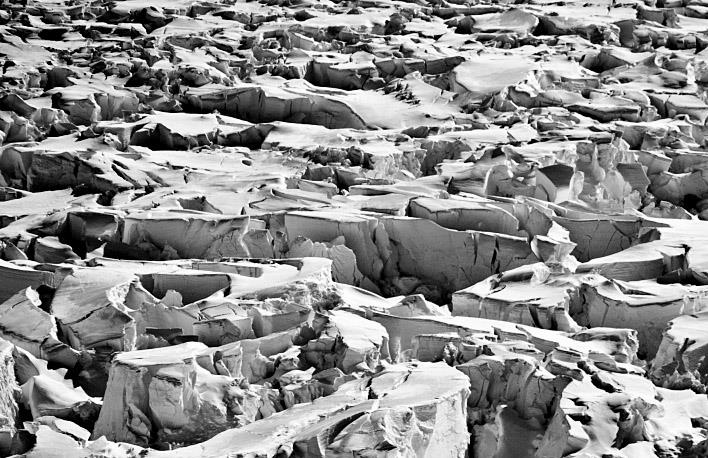
The Pine Island Glacier in 2010. The critical Antartic glacier is looking more vulnerable as satellite images show the ice shelf that blocks it from collapsing into the sea is breaking up much faster than before and spawing huge icebergs.

A critical Antarctic glacier is looking more vulnerable as satellite images show the ice shelf that blocks it from collapsing into the sea is breaking up much faster than before and spawning huge icebergs, a new study says.

The Pine Island Glacier's ice shelf loss accelerated in 2017, causing scientists to worry that with climate change the glacier's collapse could happen quicker than the many centuries predicted.  The floating ice shelf acts like a cork in a bottle for the fastmelting glacier and prevents its much larger ice mass from flowing into the ocean.

That ice shelf has retreated by 12 miles between 2017 and 2020, according to a study in Friday's Science Advances.  And the crumbling shelf was caught on time-lapse video from a European satellite that takes pictures every six days.

You can see stuff just tearing apart, said lead author Ian Joughin, a University of Washington glaciologist.  "So it almost looks like the speedup itself is weakening the glacier. ... And so far we've lost maybe 20 percent of the main shelf."

Between 2017 and 2020, there were three large breakup events, creating icebergs more than 5 miles long and 22 miles wide, which then split into lots of smaller pieces "Joughin said. There also were many smaller breakups.

"It's not at all inconceivable that the whole shelf could give way and go within a few years",  Joughin said. ld'd say that's a long shot, but not a very long shot.

Joughin tracked two points on the main glacier and found they were moving 12% faster toward the sea starting in 2017.  So that means 12% more ice from Pine Island going into the ocean that wasn't there before, he said.

The Pine Island Glacier, which is not on an island and doesn't have pine trees, is one of two side-by-side glaciers in western Antarctica that ice scientists worry most about losing on that continent. The other is the Thwaites Glacier.

Pine Island contains 180 trillion tons of ice, the equivalent of 1.6 feet of sea level rise and is responsible for about a quarter of the continent's ice loss.

Pine Island and Thwaites are our biggest worry now because they are falling apart, and then the rest of West Antarctica will follow according to nearly all models, said University of California Irvine ice scientist Isabella Velicogna, who wasn't part of the study.

While ice loss is part of climate change, there was no unusual extra warming in the region that triggered this acceleration, Joughin said.

These science results continue to highlight the vulnerability of Antarctica, a major reservoir for potential sea level rise, said Twila Moon, a National Snow and Ice Data scientist who wasn't part of the research. Again and again, other research has confirmed how Antarctica evolves in the future will depend on human greenhouse gas emissions.
0 Comments

The Club PUBlication  06/07/2021

6/7/2021

0 Comments

 
Picture
Picture

Tired? Lack motivation? Pandemic brain fog might be to blame

The phenomenon is affecting those who have had COVID-19 as well as those who haven't. 

By Kevyn Burger Special to the Star Tribune
 

JUNE 4, 2021 — 12:12PM

Picture
Decision fatigue has become a symptom of the coronavirus pandemic.
It's been a common refrain among Talee Vang's patients.

The senior clinical psychologist at Hennepin Health Care has repeatedly heard them talk about struggling to stay on task, being irritable and forgetful.
Vang chalks it up to brain fog, a side effect of the pandemic.

"I'd say it's a response to our collective fatigue, the chronic stress we've all been dealing with," she said. "People are on edge and it takes a toll on the way they think."

As we come out of an unprecedented year of changes and isolation, the term is being used to refer to a constellation of symptoms that include a lack of concentration, motivation and enthusiasm.

The phenomenon — which is affecting those who have had COVID as well as those who haven't — is attracting attention from academics, medical researchers and mental health professionals who are trying to understand exactly what brain fog is and whether it will fade as fast as toilet paper shortages or prove to be more persistent.

In addition to hearing about brain fog from her patients, Vang admits she's seeing signs it in some of her colleagues — and herself.

The mother of four children under age 12, Vang worked from home for part of 2020. She blames some of her fuzziness on the disruptions that put everyone's brain on overload.

"When you work and learn from home, there's no differentiated space," she said. "We work and relax in the same confined rooms and we're there on weekends, too. With no place to decompress, we carry the stressors with us."

Vang isn't the only one who's noticed it. Articles that analyze brain fog as part of the cognitive changes connected to COVID-19 are popping up in scientific journals.
Researchers at the University of Minnesota are exploring its implications, as well.
Psychology professor Richard Lee was in the midst of a longitudinal study on mental health in students, staff and faculty at the university. In April 2020, he and his colleagues shifted to tracking well-being during the pandemic, adding questions specifically about mental acuity. Up to 20% of respondents reported a drop in clarity of thinking.

"They self-report about having a harder time focusing, communicating, concentrating and staying motivated," he said about study participants. "They talk about a lack of enthusiasm, trudging through the day. COVID brain fog is just starting to be documented in the literature, but it's a real thing."

Lee and his collaborators plan to eventually submit their findings for publication in a scholarly journal. In the meantime, they have made presentations to administrators at the university.
"Symptoms of forgetfulness and a slowdown in thought-processing speed have huge implications for students, but this is also a factor in the workforce of the knowledge economy," he said.

"With brain fog, there could be more errors or difficulties getting things done on time. Employers may have to adjust performance standards. They will have to consider whether to be gracious or to penalize people who can't hold to the same standards as before."

A COVID side effect?
Although brain fog isn't a medical term, neurologists have long studied the phenomenon in other contexts.Scientists have verified a change in concentration, blurred memory and dysfunction in thinking associated with chemotherapy ("chemobrain"). And there is a growing body of research about "baby brain," a change in cognitive and executive function experienced by some pregnant women and new mothers.

Impaired thinking also has been linked to the COVID-19 diagnosis in some people.
Melissa Gerads Jones blamed brain fog for her difficulty holding her own in a conversation and her ability to remember things, like a favorite recipe.

"I've been kicking it out for years from memory," she said of a dish called Glow-in-the-Dark Chicken because of its reliance on turmeric. "It has a lot of steps and seasonings in varying amounts and I could not for the life of me remember what they were and how much to use. It was quite upsetting."

Jones' brain fog is likely connected to COVID-19, which she contracted in March 2020 and couldn't shake. Because of her lingering congestion, chest pain, wheezing and fatigue she's been treated at the Mayo Clinic as a so-called long hauler.

Rehabilitation physicians from Mayo have created a podcast and YouTube videos to explain brain fog as a common side effect in long-haul patients, noting that puzzling cognitive symptoms plague these recovering COVID-19 patients long after the virus cleared their system.

"I consider myself a nimble thinker, a multitasker, but I've had to think so hard about everything," Jones said. "I had a hard time following conversations. It's like wading through pudding."

Since receiving her second vaccine, Jones has felt the fog begin to lift, but only after the Minneapolis mother of two teenagers spent more than a year struggling to stay on top of their remote learning while logging into her job from her dining room table.

"I think my fog was exacerbated by working from home," she said. "Seems like we all have to work harder to do the things we do."

Nebulous trauma
For some people, brain fog has altered their spiritual practices.

"When survival mode kicked in, we put our heads down to get through every day," said the Rev. Natalia Terfa. "For many people of faith, that didn't leave the mental space required to think deep theological thoughts. It's been hard to set aside time to pray or think about God."Terfa, the pastor at Prince of Peace Lutheran Church in Brooklyn Park and host of a popular Christian podcast, sees a sort of spiritual fog interfering with the quest to find meaning during challenging times.

"Many of us don't recognize what we are feeling as grief. When there's loss or a cancer diagnosis or divorce, we lean into our faith. But the nebulous trauma of the pandemic is hard to name," she said. "We experience God through the community we're part of. Not being able to connect creates distance. And the further we get from faith, the harder it can be to walk back to it."

Terfa is curious to learn if a return to in-person services may ease some of the spiritual alienation.

Vang also wonders how she and the people she counsels will emerge from the brain fog of the pandemic.

She's advising her patients to get adequate sleep to nourish brain function, to manage and limit screen time and to prioritize summer days to take breaks and seek a change of scenery to jump-start thinking patterns.

"I tell patients to utilize PTO days," she said. "I encourage them to get outside, go fishing or on a picnic. For parents, it's helpful to take a day when kids are busy; spend time by yourself or with your partner," she said. "Once things settle and we know what the future will look like, we can adjust and readjust.
​

"I try to follow my own advice," she said. "I think it helps."

​                          Kevyn Burger is a Minneapolis-based freelance broadcaster and writer.


0 Comments

    Archives

    February 2026
    January 2026
    December 2025
    November 2025
    October 2025
    September 2025
    August 2025
    July 2025
    June 2025
    May 2025
    April 2025
    March 2025
    February 2025
    January 2025
    December 2024
    November 2024
    October 2024
    September 2024
    August 2024
    July 2024
    June 2024
    April 2024
    March 2024
    February 2024
    January 2024
    December 2023
    November 2023
    October 2023
    September 2023
    August 2023
    July 2023
    June 2023
    May 2023
    April 2023
    March 2023
    February 2023
    January 2023
    December 2022
    November 2022
    October 2022
    September 2022
    August 2022
    July 2022
    June 2022
    May 2022
    April 2022
    March 2022
    February 2022
    January 2022
    December 2021
    November 2021
    October 2021
    September 2021
    August 2021
    July 2021
    June 2021
    May 2021
    April 2021
    March 2021
    February 2021
    January 2021
    December 2020
    November 2020
    October 2020
    September 2020
    August 2020
    July 2020
    June 2020
    May 2020
    April 2020
    March 2020
    February 2020
    January 2020
    December 2019
    November 2019
    October 2019
    September 2019
    August 2019
    July 2019
    June 2019
    May 2019
    April 2019
    February 2019
    January 2019
    December 2018
    November 2018
    October 2018
    September 2018
    August 2018
    July 2018
    June 2018
    May 2018
    April 2018

    RSS Feed