
john torrison president
   
  • Club Home
  • Club Members
  • Listen with Bill
    • Bill's History
  • Turntable
    • TT History
  • The FlipSide
  • Picturesque!
  • Skips Corner
  • Gulliver's Travels
  • The Club Pub
    • Sucks News
  • Harv's Corner

The Club PUBlication  08/29/2022

8/29/2022

0 Comments

 
Picture
Picture

Robocalls on the Rise
How You Can Fight Back by Herb Weisbaum
The ConsumerMan Last updated July 8, 2022

Picture
Robo

Your car warranty has expired. You owe taxes. Your Social Security or Medicare account has been suspended. There’s a question about your most recent credit card payment. Your Amazon, Apple, or Microsoft account has been hijacked.

Despite improved technology and stronger regulations, our phones are still inundated by scam robocalls and texts. The volume is astonishing: According to Nomorobo, a robocall blocking service, scammers make nearly 30 percent of all calls placed on U.S. telecommunications networks. RoboKiller, another blocking service, reported that in May 2022 Americans received more than 6.5 billion robocalls—nearly 24 spam calls for every person in the country. It also reported that we received 11.9 billion spam text messages.

Fraudsters make robocalls and send fake texts because they are effective, cheap to set up and run, and allow criminals to solicit millions of consumers worldwide instantly. Internet-based phone technology lets them disguise (“spoof”) their own phone numbers so they seem to come from a trusted source, such as a local area code and exchange, credit card company, the IRS, or police department. RoboKiller estimates that in 2021 Americans lost more than $30 billion to scams that began with robocalls. (Because most fraud victims never report their losses, the actual figure is probably much higher.)

“Most of us think we won’t be a victim of this scam. But, certainly, with billions of dollars being lost like this, it’s happening to a lot of us,” said Amy Nofziger, director of fraud victim support for the AARP Fraud Watch Network.


Can’t the Phone Networks Reject Robocalls?

For years, regulators and phone companies have been promising that new technology would kill robocalls. But phones keep ringing.In 2019, Congress passed the Telephone Robocall Abuse Criminal Enforcement and Deterrence (TRACED) Act, which required telephone companies to implement new technology called “STIR/SHAKEN” by June 2021. (Yes, James Bond fans are involved in the project.)

The STIR/SHAKEN system requires phone companies to flag calls that don’t originate from the numbers displayed on our phones’ caller ID. That’s why your phone now often will warn that you’re getting a call from “Scam Likely” or his brother, “Suspected Scam.”

But the new system doesn’t catch all scam calls. “While STIR/SHAKEN will improve the quality of caller ID information, it does not mean the call itself is legitimate,” the Federal Communications Commission (FCC) cautions on its website. “You need to remain vigilant.”

Many scam robocalls originate from outside the country, which makes them more difficult to identify by STIR/SHAKEN technology. In May, the FCC voted unanimously to adopt new rules to stop illegal robocalls that originate overseas from entering U.S. phone networks. Gateway providers, which are the companies that connect those foreign calls to American phones, will be required to comply with STIR/SHAKEN caller ID authentication protocols, and take additional measures to validate the identity of the foreign telephone providers whose traffic they are routing.

Another limitation: STIR/SHAKEN technology works on mobile phones and internet-based telephone services, not on old-fashioned copper landlines. And it doesn’t address the growing problem of spam texts (more on that later).

While phone companies ignored the growing robocall problem for years, they are now using STIR/SHAKEN technology (as required) to block fraudulent calls that are spoofed and label those that appear suspicious. AT&T told Checkbook that it now blocks or labels about one billion robocalls per month.

Despite improving call screening technology, fighting robocalls continues to be a game of whack-a-mole, as criminals find ways to avoid detection. For example, some are now buying blocks of legitimate phone numbers to circumvent STIR/SHAKEN.

Robotexts Present Even More Problems

Despite the overwhelming number of robocalls being made, robotexts have already overtaken them as the most common way fraudsters target victims. The 2021 Year in Calling report from Truecaller, a spam-blocking company, noted its app alone blocked 38 billion spam calls last year, as well as 182 billion texts.Scam text messages, like their phishing email cousins, are designed to lull you into clicking on a malicious hyperlink or into providing sensitive information. (With texts, the practice is called “smishing.”)

A common ploy: The message says “Your package delivery is pending. Click this link to confirm your order.” Crooks also often pose as banks and send messages that say they are closing your account, hoping you’ll click on the hyperlink with the message.

Dealing with robotexts presents a different challenge for phone companies and regulators than trying to block calls. So far, they’ve tried to apply a law—the Telephone Consumer Protection Act of 1991—but it was written long before texting existed.

Clearly, new rules are needed to protect consumers from scam texters. In October 2021, FCC Chair Jessica Rosenworcel proposed rules that would require cellular service providers to block illegal text messaging.

“In a world where so many of us rely heavily on texting to stay connected with our friends and family, ensuring the integrity of this communication is vitally important,” Rosenworcel said at the time. “It’s time we take steps to confront this latest wave of fraud and identify how mobile carriers can block these automated messages before they have the opportunity to cause any harm.”

Unfortunately, Rosenworcel’s anti-scam-text proposal, which has overwhelming support from consumer advocates and other fraud-watch groups, has not come up for a vote by the commission.

In the meantime, the problem continues to worsen. Consumer complaints to the FCC about robotexts grew from about 5,700 in 2019 to 14,000 in 2020, 15,300 in 2021, and already 8,500 as of the end of June 2022.


Protect Yourself

Look for red flags. Does the caller ID show that a call or text is coming from your phone number? That’s a common trick to get you to take the crook’s call or respond to their text. And the Social Security Administration will never call you out of the blue. Should there ever be a problem with your account, they’ll send a letter via the U.S. Postal Service.

Don’t answer. If you don’t recognize a number, let the call go to voicemail. If they leave a message claiming to be with your bank, credit card company, Apple, Amazon, etc., don’t call the number provided; instead, call a number or visit a website for the company that you know is legitimate, such as one on a statement or credit card, to find out what’s really going on.

Don’t click on links. The hyperlinks criminals include in their scam texts often lead to a website they’ve set up to look like a legitimate online portal for a familiar bank or company. Their goal is to get you to share your user account, password, or other personal info. Never click on links sent via text or email; instead, go to the company’s website or call its customer support line.

Don’t share. Never give out personal information such as account numbers, Social Security numbers, mother’s maiden names, passwords, or other identifying information in response to unexpected calls, or if you are suspicious.

Don’t pay up. Banks, retailers, and the federal government won’t insist you pay via Bitcoin or other cryptocurrency, or use a peer-to-peer app (such as Venmo or Zelle), or ask you to buy gift cards.
​

Use available tools. Most phone companies offer apps for your mobile phone or VoIP devices that can help block unwanted calls. The Federal Trade Commission and the Federal Communications Commission have detailed information about robocalls and robotexts. The FCC also has a list of call blocking resources available from phone companies, phone manufacturers, and third-party screening services.
​


Not sure? Call for help. AARP's Fraud Watch Network Helpline is a fantastic resource. If you get a call and don’t know what to do, you can call 877-908-3360 for advice. You do not need to be an AARP member to use it.

Contributing editor Herb Weisbaum (“The ConsumerMan”) is an Emmy award-winning broadcaster and one of America's top consumer experts. He is also the consumer reporter for NW Newsradio in Seattle. You can also find him on Facebook, Twitter, and at ConsumerMan.com.
0 Comments

The Club PUBlication  08/22/2022

8/22/2022

0 Comments

 
Picture
Picture

​Best Buy expands over-the-counter hearing aid assortment after FDA ruling
​

The retailer will begin to offer aids for mild to moderate hearing issues this fall along with an assessment tool for customers. 
By  Nicole Norfleet Star Tribune
 
AUGUST 17, 2022

Picture
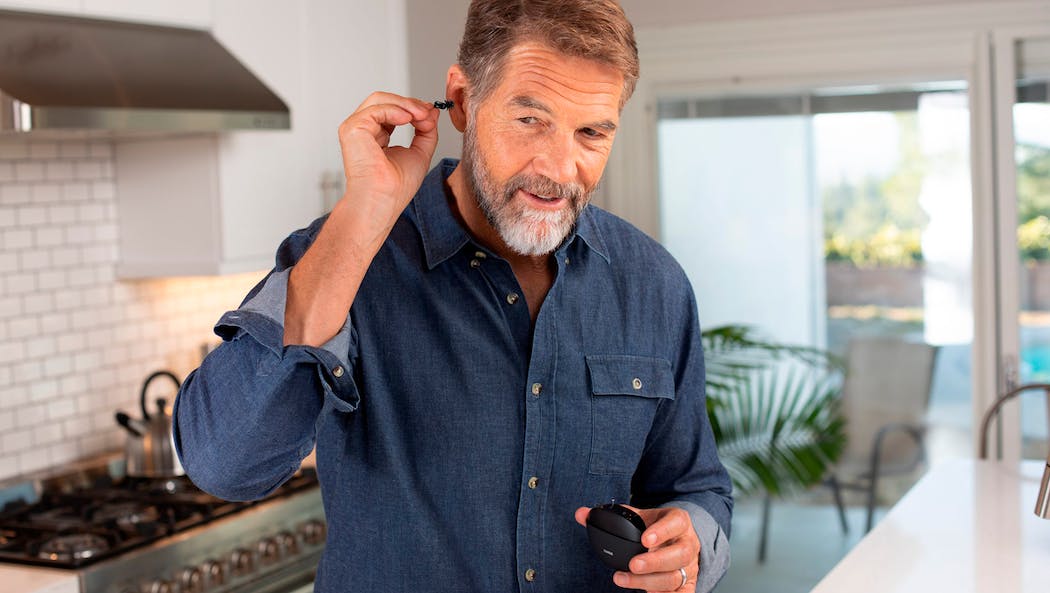
Best Buy will begin selling over-the-counter hearing aids following a market-expanding rule issued earlier this week by the FDA.

​Best Buy will soon offer a wider selection of hearing aids after a federal ruling this week created a market expansion for devices that don't require a prescription.


On Tuesday, the U.S. Food and Drug Administration issued its final rule to allow the sale of over-the-counter hearing aids. These types of hearing devices would be for those with less severe hearing issues and would not require a medical exam, prescription or a fitting by an audiologist.

Best Buy said Wednesday it would offer more hearing devices this fall and create a new customer in-store experience in more than 300 stores for those looking to buy devices.

It will also make available an online hearing assessment tool for customers to determine the severity of their hearing loss.


"Our expansion of the hearing collection and new store experience will let customers easily find a hearing loss solution from brands they trust," said Frank Bedo, category officer of e-commerce and health at Best Buy, in a statement.

For years, the Richfield-based electronics chain has offered hearing solutions such as personal sound amplification products, self-fitting hearing devices, television amplifiers, hearing protection devices and other accessories.
​

Later this year, the collection will grow to include over-the-counter hearing devices for mild or moderate hearing loss from brands like Lexie Hearing, Nuheara, Jabra Enhance Plus and others.


Nicole Norfleet covers the fast-paced retail scene including industry giants Target and Best Buy. She previously covered commercial real estate and professional services.


[email protected] 612-673-4495 nicolenorfleet
0 Comments

The Club PUBlication  08/15/2022

8/15/2022

0 Comments

 
Picture
Picture

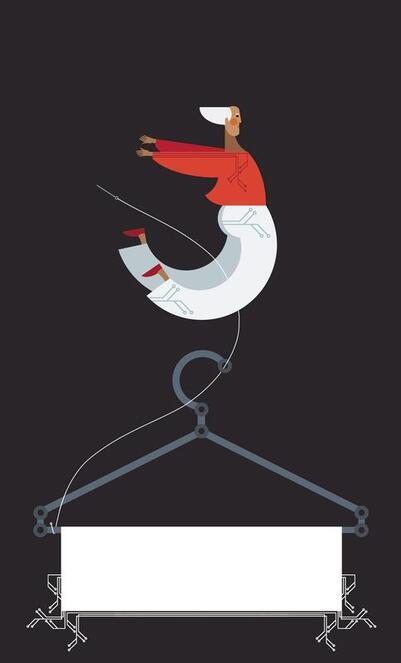
​Future threads
Robots will one day wind up in our clothing with fabric that’s wired to help.
By PRANSHU VERMA • Washington Post

Picture

In the Wallace and Gromit clay-animated movie "The Wrong Trousers," a pair of futuristic pants lets people walk on walls and ceilings.

Researchers in England said the film sparked an idea: Robotic clothes could help society.

They created "The Right Trousers," a set of pants embedded with electrical pumps to force air into tiny tubes that expand and can help elderly or disabled people with issues like getting up or improving blood circulation.

Now, in university labs across the world, material scientists, computer programmers and fabric designers are working to advance robotic clothing at a rapid pace, inching us closer to a reality where the clothes we wear help us keep healthy or improve daily life.

"We're sort of at the pre-iPhone announcement [stage]," said Yoel Fink, a materials science professor at MIT. "It's very, very exciting."

In June, researchers in Australia created robotic textile fibers, which can make fabric move automatically.

Last year, scientists at MIT fabricated computer programmable threads and built fiber batteries using battery gels that could embed into clothes and power robotic textiles. In a sign that the technology is approaching maturity, the intelligence community announced in July it's looking to develop smart clothes for soldiers and spies.

Researchers said their work is at a turning point, and could soon unlock an era where clothing will act more like a computer, sensing how your body feels and telling your clothes how to help. In the coming decade, scientists said, customers can expect a whole range of futuristic offerings: pants that can help lift elderly or disabled people up; athletic socks that can promote blood flow through automatic compression; maternity clothes that could passively track fetal heart rates to improve pregnancy outcomes.

Textiles have been around for centuries. The interlocking weaves of yarn, fabric and thread have made empires rich and remained relatively unchanged for decades.

In recent years, companies have begun releasing smart clothing, which connects to cellphones.

Google — through its Jacquard project — partnered with brands like Levi's, Yves Saint Laurent and Adidas to put sensors in denim jackets, backpacks and shoes, letting users access their phones instantly, swiping sleeves to change music.
Fashion technology startup Wearablex built yoga pants that emit vibrations to improve your posture, also through a smartphone.

But these connected clothes are just the first wave of smart clothing technology, researchers said, and technological advances they're working on will create clothing that can do far more.

At the University of New South Wales in Australia, researchers are creating fabrics that can shape shift. Than Nho Do, a senior lecturer at the school, said his team has created tiny silicon tubes, similar to the size of yarn and inspired by muscle fibers, that can weaving into sheets of fabric. These tubes, triggered by electronic or thermal stimulation, can make fabric take various preprogrammed shapes.

But challenges still remain for Do's team, notably around making these robotic tubes smaller so they can weave easily with yarns and other fabrics without adding bulk, he said. Currently, they have a .5-mm diameter and are aiming for 0.1mm, roughly the size of an average syringe needle tip. Yarn can average around 3 to 4 mm.

To make smart clothing truly transformational, though, requires computing power inside fabrics, so they can monitor physiological signs and direct the technology, Fink said. Researchers are attempting to build computing fabrics that could process data being generated by the human skin and turn it into commands that clothes obey.

"Software is going to determine what services you're receiving," he said, "and that thing is going to look like your T-shirt and your pants that you're wearing right now."

To that end, Fink and other researchers from MIT have created fibers with hundreds of silicone microchips to transmit digital signals — essential if clothes are to automatically track things like heart rate or foot swelling. These fibers are small enough to pass through a needle that can be sown into fabric and washed at least 10 times.

Others at the institute have also created rechargeable lithium-ion batteries in the form of an ultralong fiber that can be woven into fabric, powering textiles without an external power source.

But one of the biggest challenges facing the field, Fink said, is design. "What could this fabric look like?" he said.

It should "look exactly, feel exactly, wear exactly, wash exactly like the fabric you're wearing right now."

He noted that his lab is partnering with industrial designers from the Rhode Island School of Design to attack key questions.

Rebecca Kramer-Bottiglio, a professor of mechanical engineering at Yale University, agreed that many challenges remain before smart textiles "reach their full potential." It will be challenging to make these clothes, filled with fibers and technology, durable enough to withstand multiple cycles in the laundry, she said.
Kramer-Bottiglio noted that size will be a challenge, too.

"The added bulk of specialized fibers could make wearable smart textiles uncomfortable or difficult" to put on or remove. Furthermore, she added, researchers will have to find the most optimal way to place robotic fibers in fabrics and ensure power sources are light weight.

Despite that, she says researchers will figure out a way forward.
​
"Recent breakthroughs," Kramer-Bottiglio said, "point toward a not-so-distant future where smart textiles will be a part of our everyday wardrobe."
0 Comments

The Club PUBlication  08/08/2022

8/8/2022

0 Comments

 
Picture
Picture

On my 100th birthday …
Reflections on Archie Bunker, Donald Trump and the future. 
By Norman Lear
 
JULY 28, 2022 — 11:00AM​

Picture
Reaching age 100 “is cause for a bit of reflection on my first century — and on what the next century will bring for the people and country I love,” writes Norman Lear, a father of six, an Emmy-winning television producer and a co-founder of the advocacy organization People for the American Way. “To be honest, I’m a bit worried that I may be in better shape than our democracy is.”
Well, I made it. I turned 100 years old on Wednesday. I wake up every morning grateful to be alive.

Reaching my own personal centennial is cause for a bit of reflection on my first century — and on what the next century will bring for the people and country I love. To be honest, I'm a bit worried that I may be in better shape than our democracy is.

I was deeply troubled by the attack on Congress on Jan. 6, 2021 — by supporters of former President Donald Trump attempting to prevent the peaceful transfer of power. Those concerns have only grown with every revelation about just how far Mr. Trump was willing to go to stay in office after being rejected by voters — and about his ongoing efforts to install loyalists in positions with the power to sway future elections.

I don't take the threat of authoritarianism lightly. As a young man, I dropped out of college when the Japanese attacked Pearl Harbor and joined the U.S. Army Air Forces. I flew more than 50 missions in a B-17 bomber to defeat fascism consuming Europe. I am a flag-waving believer in truth, justice and the American way, and I don't understand how so many people who call themselves patriots can support efforts to undermine our democracy and our Constitution. It is alarming.
​

Picture
Carroll O’Connor as Archie Bunker and Jean Stapleton as Edith Bunker in Norman Lear’s show “All in the Family.”

​At the same time, I have been moved by the courage of the handful of conservative Republican lawmakers, lawyers and former White House staffers who resisted Trump's bullying. They give me hope that Americans can find unexpected common ground with friends and family whose politics differ but who are not willing to sacrifice core democratic principles.

Encouraging that kind of conversation was a goal of mine when we began broadcasting "All in the Family" in 1971. The kinds of topics Archie Bunker and his family argued about — issues that were dividing Americans from one another, such as racism, feminism, homosexuality, the Vietnam War and Watergate — were certainly being talked about in homes and families. They just weren't being acknowledged on television.

For all his faults, Archie loved his country and he loved his family, even when they called him out on his ignorance and bigotries. If Archie had been around 50 years later, he probably would have watched Fox News. He probably would have been a Trump voter. But I think that the sight of the American flag being used to attack Capitol Police would have sickened him. I hope that the resolve shown by U.S. Reps. Liz Cheney and Adam Kinzinger, and their commitment to exposing the truth, would have won his respect.

It is remarkable to consider that television — the medium for which I am most well-known — did not even exist when I was born, in 1922. The internet came along decades later, and then social media. We have seen that each of these technologies can be put to destructive use — spreading lies, sowing hatred and creating the conditions for authoritarianism to take root. But that is not the whole story. Innovative technologies create new ways for us to express ourselves and, I hope, will allow humanity to learn more about itself and better understand one another's ideas, failures and achievements. These technologies have also been used to create connection, community and platforms for the kind of ideological sparring that might have drawn Archie to a keyboard. I can only imagine the creative and constructive possibilities that technological innovation might offer us in solving some of our most intractable problems.

I often feel disheartened by the direction that our politics, courts and culture are taking. But I do not lose faith in our country or its future. I remind myself how far we have come. I think of the brilliantly creative people I have had the pleasure to work with in entertainment and politics, and at People for the American Way, a progressive group I co-founded to defend our freedoms and build a country in which all people benefit from the blessings of liberty. Those encounters renew my belief that Americans will find ways to build solidarity on behalf of our values, our country and our fragile planet.

Those closest to me know that I try to stay forward-focused. Two of my favorite words are "over" and "next." It's an attitude that has served me well through a long life of ups and downs, along with a deeply felt appreciation for the absurdity of the human condition.

Reaching this birthday with my health and wits mostly intact is a privilege. Approaching it with loving family, friends and creative collaborators to share my days has filled me with a gratitude I can hardly express.
​
This is our century, dear reader, yours and mine. Let us encourage one another with visions of a shared future. And let us bring all the grit and openheartedness and creative spirit we can muster to gather together and build that future.


​Norman Lear produced "All in the Family," "Maude," "The Jeffersons" and "Good Times," among other groundbreaking television shows. He is a member of the Television Academy Hall of Fame and a recipient of the National Medal of Arts and Kennedy Center Honors. An activist and philanthropist, he co-founded and serves on the board of the advocacy organization People for the American Way. This article originally appeared in the New York Times.
0 Comments

The Club PUBlication  08/01/2022 (2)

8/1/2022

0 Comments

 
Picture
Picture

​Mackay: Compassion is at the heart of everything we do
Contrary to the saying, nice guys often do come in first. And being kind, considerate and empathetic can go a long way to building trust. 
By  Harvey Mackay Special to the Star Tribune
 
JULY 31, 2022 — 2:00PM

Picture
The art of listening is not easy. But it is important, especially if you want others to listen to what you have to say.
Author and lecturer Leo Buscaglia once talked about a contest he had been asked to judge. The purpose of the contest was to find the most caring child. The winner was a 4-year-old child whose next-door neighbor was an elderly gentleman who had recently lost his wife.
​

Upon seeing the man cry, the little boy joined the old gentleman in his garden, climbed onto his lap and sat there.

When his mother asked him what he had said to the neighbor, the little boy said: "Nothing. I just helped him cry."

Compassion is at the heart of every little thing we do. It is the dearest quality we possess. Yet all too often, it can be cast aside, with consequences too tragic to speak of. To lose our compassion, we lose what it is to be human.

Although compassion seems to be a waning art these days, we can choose to show it to others through kindness. Kindness should not be confused with weakness. Quite the opposite, kindness demonstrates basic decency and respect that reflect a willingness to get along with someone, even when you disagree with them.

Contrary to the common saying, nice people can often do finish first. No one wants to work with or do business with someone who treats them rudely or disrespectfully.

It's a funny thing about kindness: The more it's used, the more you have. The smallest act of kindness can have a significant impact on a person's life.

Other things to show compassion:

Simply listen carefully and without judgment. 
​Listening can be hard work, and some people are more challenging to listen to than others. But if you want people to listen to you, you need to listen to them.


Encourage people. 
​Offering compliments based on a person's character or actions inspires them to perform in such a manner that it invites additional praise. Encouragement is oxygen to the soul.


Give forgiveness. 
Forgiving someone ultimately makes you stronger. A nationwide Gallup poll found that 94% of those surveyed said it was important to forgive. Yet in the same survey, only 48% said they usually tried to forgive others.


I don't think a single person can escape life without being hurt by another person. That's as true in business as in every other phase of life. Everyone, and I mean everyone, messes up, hurts others, finds fault, misjudges and acts emotionally and improperly from time to time at the expense of others. It is far better to forgive and forget than to resent and remember.

Express gratitude and appreciation. 
Saying thank you — and meaning it — is never a bad idea. It appeals to a basic human need to be appreciated. It sets the stage for the next pleasant encounter. And it helps keep in perspective the importance of receiving and giving help.


Be patient. 
The world today is testing everyone's patience. And we have never needed it more. Patience is an invaluable virtue, but it takes some work. We live in a world where we are used to getting things quickly, including information or products. This impatient attitude can cause a lot of harm — unproductive time, stress, poor decisions and more.


Research shows that when we feel compassion, our heart rate slows and we secrete the bonding hormone oxytocin, which results in people wanting to care for other people.

Maybe that's why compassionate people live longer. Who doesn't want that?

Mackay's Moral: Helping someone up won't pull you down.

​Harvey Mackay is a Minneapolis businessman. Contact him at 612-378-6202 or e-mail [email protected].

[email protected]
0 Comments

    Archives

    February 2026
    January 2026
    December 2025
    November 2025
    October 2025
    September 2025
    August 2025
    July 2025
    June 2025
    May 2025
    April 2025
    March 2025
    February 2025
    January 2025
    December 2024
    November 2024
    October 2024
    September 2024
    August 2024
    July 2024
    June 2024
    April 2024
    March 2024
    February 2024
    January 2024
    December 2023
    November 2023
    October 2023
    September 2023
    August 2023
    July 2023
    June 2023
    May 2023
    April 2023
    March 2023
    February 2023
    January 2023
    December 2022
    November 2022
    October 2022
    September 2022
    August 2022
    July 2022
    June 2022
    May 2022
    April 2022
    March 2022
    February 2022
    January 2022
    December 2021
    November 2021
    October 2021
    September 2021
    August 2021
    July 2021
    June 2021
    May 2021
    April 2021
    March 2021
    February 2021
    January 2021
    December 2020
    November 2020
    October 2020
    September 2020
    August 2020
    July 2020
    June 2020
    May 2020
    April 2020
    March 2020
    February 2020
    January 2020
    December 2019
    November 2019
    October 2019
    September 2019
    August 2019
    July 2019
    June 2019
    May 2019
    April 2019
    February 2019
    January 2019
    December 2018
    November 2018
    October 2018
    September 2018
    August 2018
    July 2018
    June 2018
    May 2018
    April 2018

    RSS Feed