john torrison president
   
  • Club Home
  • Club Members
  • Listen with Bill
    • Bill's History
  • Turntable
    • TT History
  • The FlipSide
  • Picturesque!
  • Skips Corner
  • Gulliver's Travels
  • The Club Pub
    • Sucks News
  • Harv's Corner

Harv's Corner  04/22/2024

4/22/2024

0 Comments


Harv's Corner

Picture
Harv
Global Warming is not a hoax or a myth, it is a stark reality that we must accept and address as a global community. The scientific evidence is overwhelming, the data is clear, and the consequences are dire. The melting of the polar ice caps, rising sea levels, more frequent and severe natural disasters, and the extinction of numerous animal species are just a few of the catastrophic effects of global warming. It is not just a political issue, it is a humanitarian and environmental crisis that threatens the very future of our planet. We must all take action now, before it is too late.  
Picture
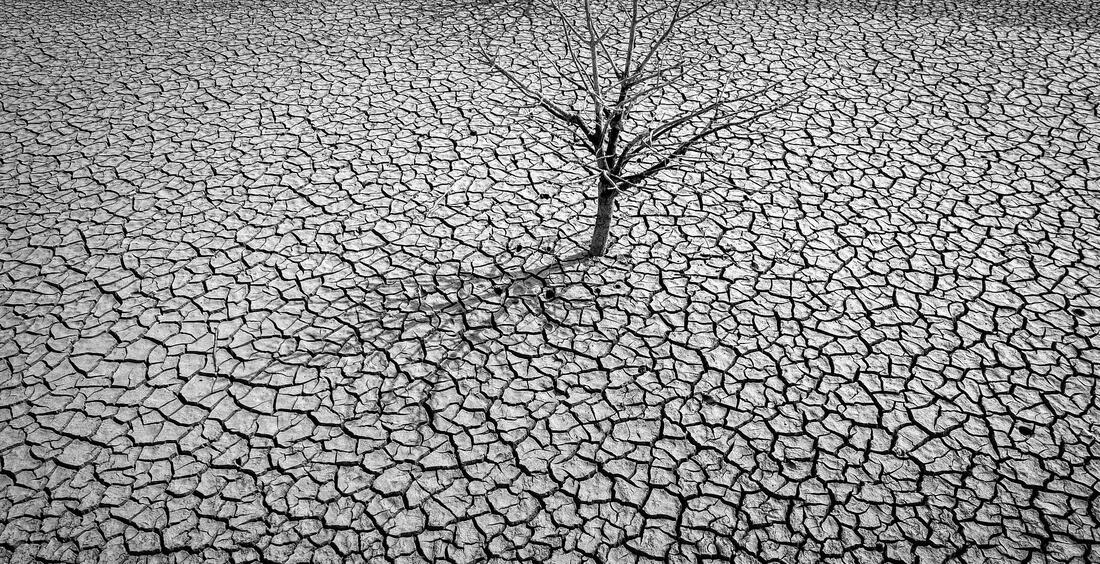
THE CRACKED EARTH OF SAU RESERVOIR WAS VISIBLE NORTH OF BARCELONA, SPAIN , IN MARCH OF 2023, EARLY IN A YEAR WHEN EARTH WENT ON TO SHATTER GLOBAL ANNUAL HEAT RECORDS.

QUANTUM LEAP IN WARMING
Scale and intensity of Earth’s extraordinary hot streak might be sign of a new climate era
Story by SARAH KAPLAN • Washington Post • Photo by EMILIO MORENATTI • Associated Press

The heat fell upon Mali's capital like a thick, smothering blanket — chasing people from the streets, stifling them inside their homes. For nearly a week at the beginning of April, the temperature in Bamako hovered above 110 degrees Fahrenheit. The cost of ice spiked to 10 times its normal price, an overtaxed electrical grid sputtered and shut down.

With much of the majority-Muslim country fasting for the holy month of Ramadan, dehydration and heat stroke became epidemic. As their body temperatures climbed, people's blood pressure lowered.

Their vision went fuzzy, their kidneys and livers malfunctioned, their brains began to swell. At the city's main hospital, doctors recorded a month's worth of deaths in just four days. Local cemeteries were overwhelmed.

The historic heat wave that besieged Mali and other parts of West Africa this month — which scientists say would have been "virtually impossible" in a world without human-caused climate change — is just the latest manifestation of a sudden and worrying surge in global temperatures.

Fueled by decades of uncontrolled fossil fuel burning and an El Nino climate pattern that emerged last June, the planet this year breached a feared warming threshold of 1.5 degrees Celsius above preindustrial levels.

Nearly 19,000 weather stations have notched record high temperatures since Jan. 1. Each of the last 10 months has been the hottest of its kind.
The scale and intensity of this hot streak are extraordinary even considering the unprecedented amount of greenhouse gases in the atmosphere, researchers say.

Scientists are still struggling to explain how the planet could have exceeded previous temperature records by as much as half a degree Celsius (0.9 degrees Fahrenheit) last fall.

What happens in the next few months, said Gavin Schmidt, director of the NASA Goddard Institute for Space Studies, could indicate whether Earth's climate has undergone a fundamental shift — a quantum leap in warming that is confounding climate models and stoking ever more dangerous weather extremes.

But even if the world returns to a more predictable warming trajectory, it will only be a temporary reprieve from the conditions that humanity must soon confront, Schmidt said. "Global warming continues apace."

Mysterious heat
As soon as the planet entered an El Nino climate pattern — a naturally occurring phenomenon associated with warming in the Pacific Ocean — scientists knew it would start breaking records. El Ninos are associated with spikes in Earth's overall temperature, and this one was unfolding on a planet that has already warmed 1.2 degrees Celsius (2.2 degrees Fahrenheit) from preindustrial levels.

Yet this El Nino didn't just break records; it obliterated them.
Four consecutive days in July became the hottest days in history.
The Northern Hemisphere saw its warmest summer — and then its warmest winter — known to science.

By the end of 2023, Earth's average temperature was nearly 1.5 degrees Celsius (2.7 degrees Fahrenheit) higher than the preindustrial average — and about 0.2 degrees Celsius (0.36 degrees Fahrenheit) hotter than climate modelers predicted it would be, even taking El Ninto into account.

Researchers have spent the past several months investigating possible explanations for that 0.2 C discrepancy: a volcanic eruption that spewed heat-trapping water vapor into the atmosphere, changes in shipping fuel that affected the formation of clouds that block the sun. So far, those factors can only account for a small fraction of the anomaly, raising fears that scientists' models may have failed to capture a longerlasting change in the climate system.

"What if the statistical connections that we are basing our predictions on are no longer valid?" Schmidt said. "It's niggling at the back of my brain that it could be that the past is no longer a guide to the future."

A key test will come over the next few months, as the planet shifts out of an El Nino and into its opposite pattern, La Nina — something that the National Weather Service predicts will happen by the summer.

Because La Nina is typically associated with cooler global temperatures, scientists expect it will bring an end to Earth's record hot streak.

There are hints that may be happening, said Zeke Hausfather, a climate scientist at Berkeley Earth and the payments company Stripe. Even though last month was the hottest March in history, it broke the previous record by a mere 0.1 degree Celsius — not the whopping 0.5 C margin seen last September.

A whole new kind of weather
Even if global average temperatures do return to a more predictable trajectory, the effects of warming on people and ecosystems have already entered uncharted territory.

Sea ice around Antarctica shrank to its smallest extent ever last year. The mighty Amazon River has reached its lowest level since measurements began. Researchers this week declared a global coral bleaching event — just the fourth in history — and warned that the crisis in the oceans is on track to set a record.

"The climate is warming at such a rate that we're now pushing beyond the bounds of what would have been not even normal weather but feasible weather in the past," said Clair Barnes, a researcher at the Grantham Institute at Imperial College London.

In the analysis published Thursday, Barnes and her colleagues reported that the recent heat wave in West Africa could not have occurred on a cooler, preindustrial planet. In one Malian city, the mercury hit 48.5 degrees Celsius (119.3 degrees Fahrenheit) — likely the hottest temperature ever reliably recorded in Africa, the researchers said.

Nights offered little relief, with temperatures often staying above 90 degrees. Studies show that high nighttime temperatures are especially dangerous, because they deny the body a chance to recover.

As in most climate disasters, the heat wave's worst effects were borne by some of the world's poorest and most vulnerable people. Few in Mali and Burkina Faso have access to air conditioning, Guigma said.

And the architecture of many poorer neighborhoods — where buildings are often constructed with heat-trapping bricks and metal roofs — exacerbated the danger.

The heat wave analysis was just the latest report from World Weather Attribution — a global network of researchers who study the influence of climate change on extreme events — to find that previously unthinkable events are becoming commonplace as the world continues to warm.

"If we keep putting carbon dioxide and other greenhouse gases into the atmosphere, we're just going to keep warming ... and this is going to continue to get worse," Barnes said. "The sad truth is this is not the new normal.
This is on the way to the unknown."

0 Comments


Leave a Reply.

    Archives

    December 2025
    November 2025
    October 2025
    September 2025
    August 2025
    July 2025
    June 2025
    May 2025
    April 2025
    March 2025
    February 2025
    January 2025
    December 2024
    November 2024
    October 2024
    September 2024
    August 2024
    July 2024
    June 2024
    May 2024
    April 2024
    March 2024
    February 2024
    January 2024

    Categories

    All

    RSS Feed